
Reference · last updated 2026-05-20
What we can — and can't — remove.
A plain-English reference for what a typical clean handles, and where the line is between cleaning and restoration. We'd rather tell you up-front than surprise you at the door.
What we CAN remove
- Dust — surfaces, fans, vents, baseboards, trim
- Soap scum — tubs, showers, sinks, fixtures
- Water spots — chrome, glass, stainless
- Kitchen grease — countertops, backsplash, range, hood
- General grime — floors, switches, handles, high-touch surfaces
- Light pet hair — floors, furniture surfaces, edges
- Surface buildup — soap, lime, mineral, food residue
- Fingerprints — glass, stainless, mirrors, switch plates
- Cobwebs — ceiling edges, upper corners, light fixtures
- Streaks — mirrors, windows (interior), glass surfaces
What we CANNOT remove
- Permanent stains — set-in fabric, carpet, or grout staining
- Paint — dried paint splatter, overspray, accidental marks
- Rust — on porcelain, metal, grout, or tile
- Mold remediation — black mold, mildew that has rooted into caulk or grout (requires a licensed remediation company)
- Aged grout discoloration — permanent yellowing or color change in grout that won't lift with cleaning
- Deep wall damage — gouges, holes, water damage, smoke staining requiring repair or repainting
- Hard-water etching — permanent mineral damage already cut into glass or chrome
- Pet stains that have penetrated — subfloor or pad-level urine damage
- Smoke residue — nicotine staining or fire-damage residue on walls/ceilings
Where the line falls
The four we get asked about most.
Same surface, two very different problems. The left side of each photo is cleaning. The right side is a trade.
Baseboards
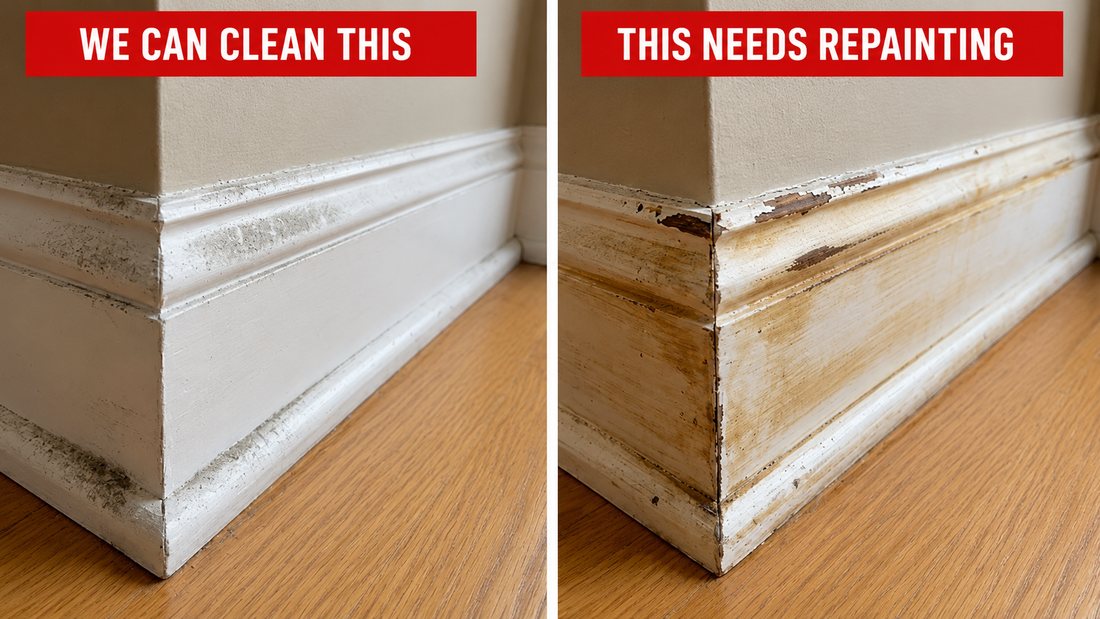
Baseboards collect two very different problems, and it matters which one yours have. Dust, grime, scuffs, and buildup sitting on the surface come off with a wet hand-wipe, and that is included in every deep clean. But baseboards that have yellowed, browned, or worn through are a different story: that discolouration has penetrated the paint or finish itself, and the finish is the surface.
No amount of scrubbing removes colour from inside paint. Scrubbing harder just strips the finish, leaving a patchy, flat spot that looks worse than the stain did, and now needs repainting anyway. When a baseboard has reached that point, the honest fix is a coat of paint, not a cleaner pretending otherwise. We will clean yours as far as cleaning goes, and we will tell you straight when what is left is a paint job.
Wall stains
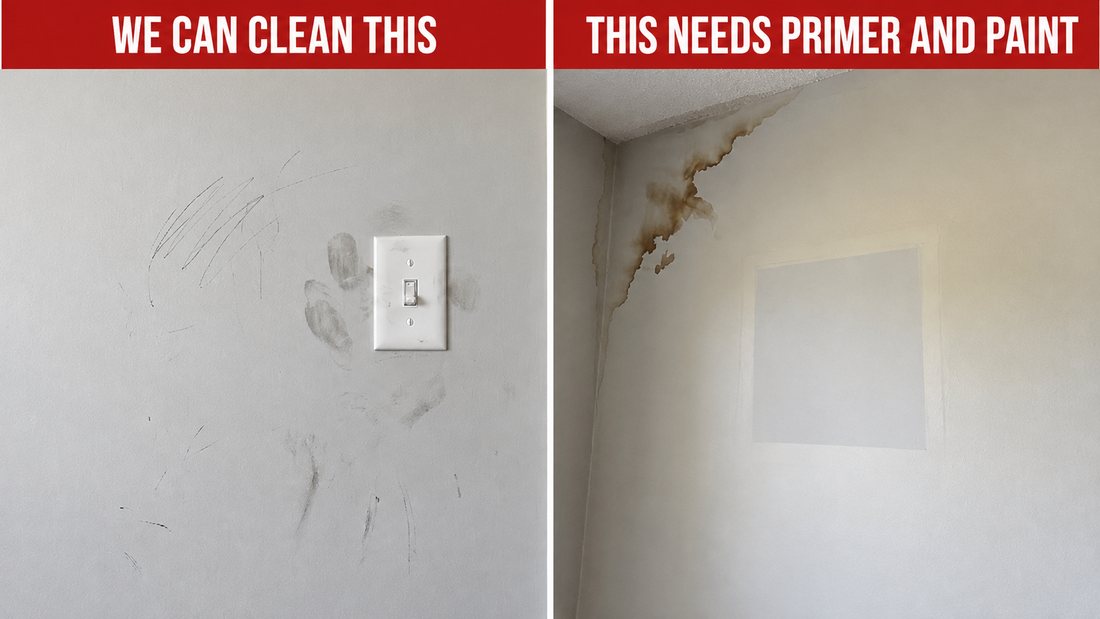
Walls take marks in layers. Fingerprints, scuffs, crayon, and surface smudges sit on top of the paint, and those we lift on every deep clean. But stains that have soaked into the paint, water marks, smoke and grease discolouration, sun fading, or marks that have sat for years, have chemically bonded with or changed the paint itself.
Most interior walls are flat or eggshell finish, which is essentially porous, and scrubbing a set-in stain on flat paint does one of two things: burnishes a shiny spot into the finish, or rubs the paint off entirely. Either way you would trade a stain for permanent damage we caused, and we will not do that to your walls. We spot-clean everything that is removable and flag anything that needs primer and paint, because that is what actually fixes it.
Deep floor stains
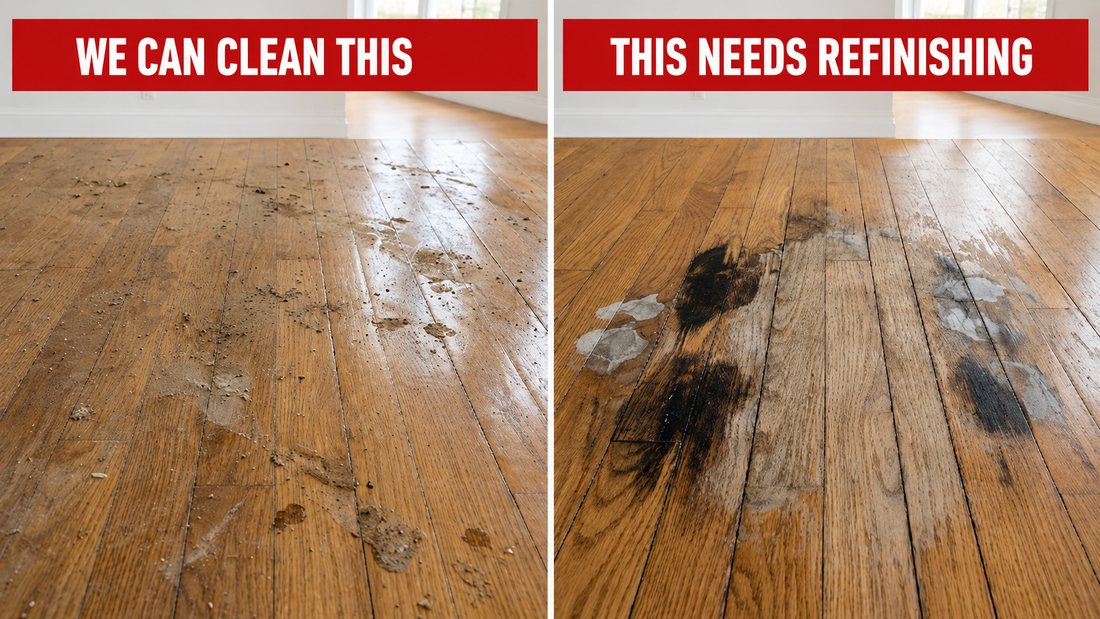
Hard floors are a finish over a material, and stains live in one or the other. Dirt, film, and residue on top of the finish mop away, and we get all of it. But when a stain has penetrated the finish into the material itself, pet urine that has blackened hardwood, water rings that have gone grey, discolouration in tile or vinyl, or etching in stone, the stain is now inside the floor.
The only ways to reach it are sanding, refinishing, honing, or replacement, and those are flooring-contractor jobs with flooring-contractor equipment. Attacking a set-in floor stain with aggressive chemicals or abrasives risks stripping the surrounding finish, bleaching the material, or scratching it permanently, turning one bad spot into a bad section. We clean your floors to the limit of what the finish allows, and we will tell you when a spot needs a refinisher instead of a mop.
Deep carpet stains
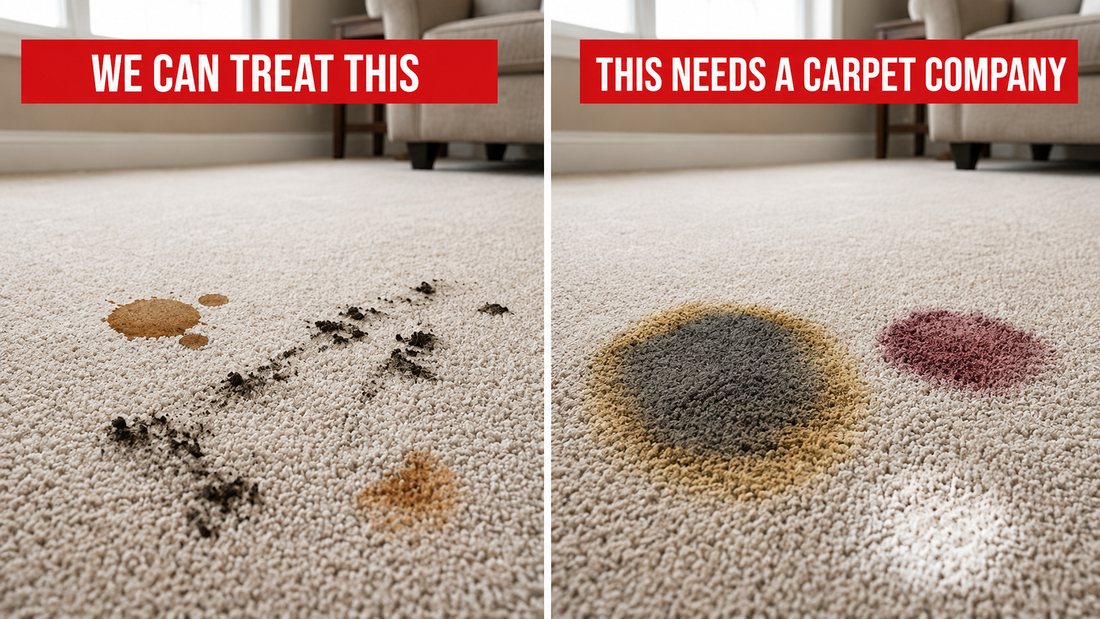
Carpet stain treatment lifts what sits in the fibres: spills, spots, and everyday marks respond to spot treatment, and we offer that as an add-on. But a stain that has soaked through the fibre into the backing and pad underneath, old pet accidents, dye-based stains like wine or Kool-Aid that have set, or bleach spots where the colour is simply gone, cannot be lifted from the surface, because the surface is not where it lives any more.
Fixing that takes hot water extraction equipment, sub-surface treatment, or in the case of bleach spots, re-dyeing or patch replacement, which is dedicated carpet-company work. Over-treating a set stain with surface chemicals can spread it, set it deeper, or leave a lightened halo around it. We treat what is treatable, and when a stain needs an extraction truck, we say so instead of charging you to make it worse.
Why this matters
Cleaning vs. restoration.
Cleaning removes what's on top of a surface. Restoration repairs or replaces the surface itself. We do the first; the second is a different trade entirely.
If your job is closer to restoration — refinishing, painting, mold remediation, structural repair — we can usually refer you to a specialist we trust. Just ask.
Ready when you are.
If your job fits, the quote tool gives you a price in 60 seconds. If you're not sure, email a photo first — we'll tell you straight.